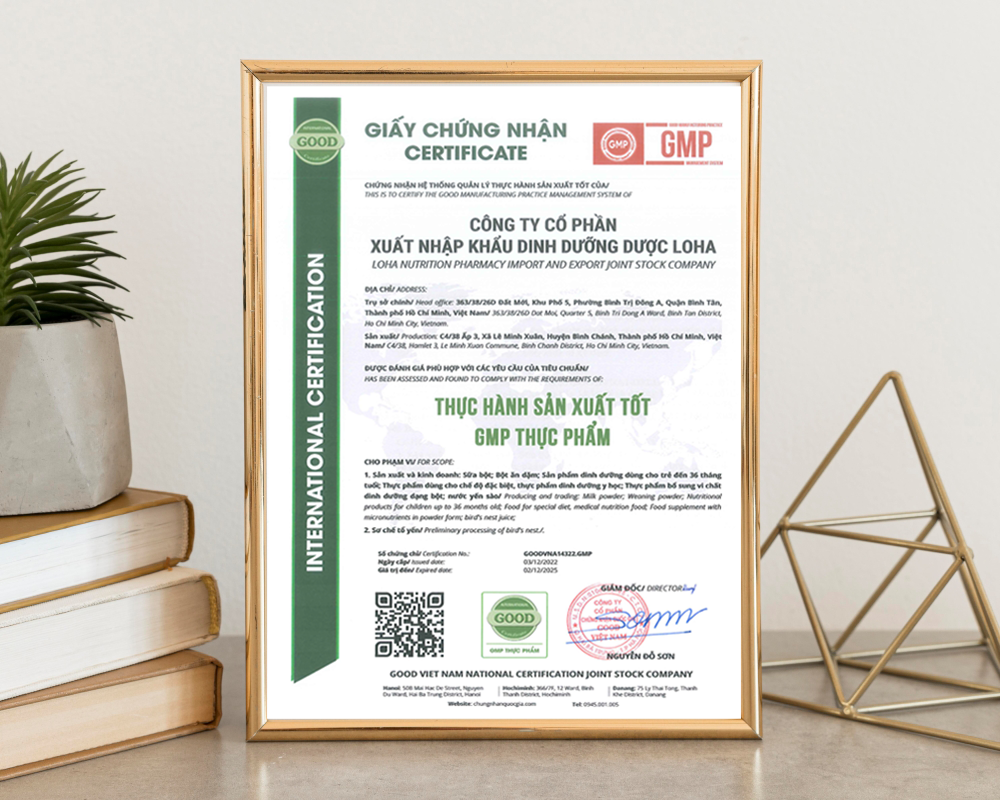
Certification – Good Manufacturing Practice (GMP) is a system that ensures products are consistently produced and controlled according to quality standards.
GMP certification services at the National Certification Office are:
Nationwide implementation
24/7 support
Experienced, friendly, and enthusiastic experts
Legal GMP certificate, valid for contracts and bidding
Good Manufacturing Practice (GMP) are the necessary practices to comply with the principles recommended by the agencies that control the licensing of the manufacture and sale of food, beverages, cosmetics, pharmaceuticals, food supplements, and medical devices.
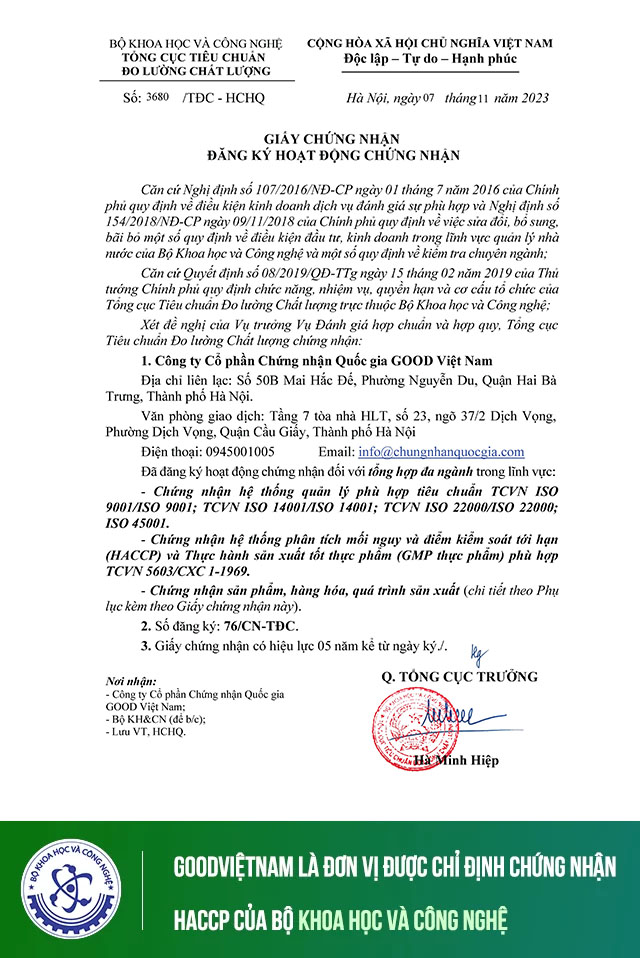
GMP Certification Operation Registration Certificate of Goodvietnam certified by the Directorate for Standards, Metrology and Quality – Ministry of Science and Technology
→ WHAT IS GMP?
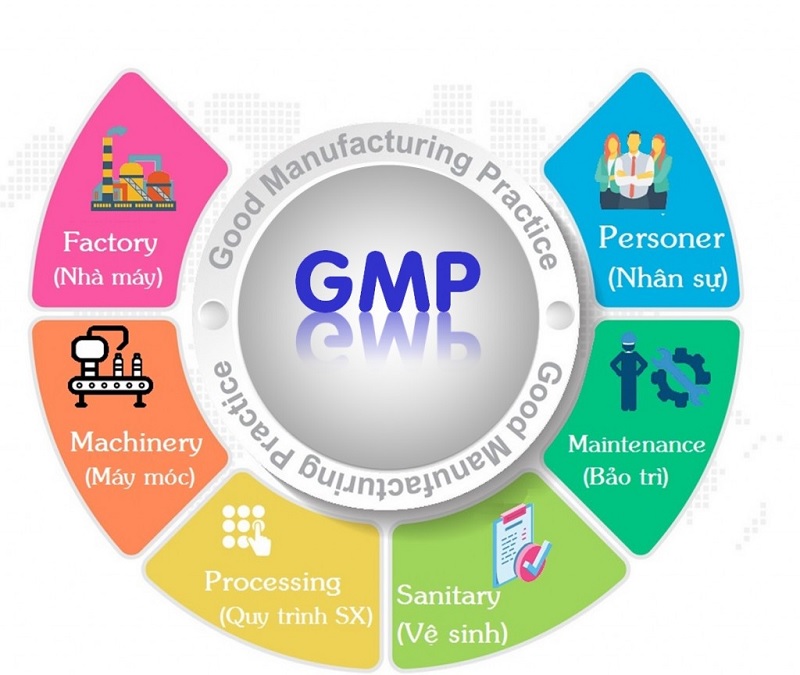
– GMP – GOOD MANUFACTURING PRACTICE is a system of standards for good manufacturing practices aimed at controlling factors that can affect the product quality creation process, with the purpose of ensuring product quality.
– GMP criteria require manufacturers, processors, and packers of certain drugs, medical devices, and food to proactively take steps to ensure their products are safe.
– GMP regulations address many different issues, including record keeping, personnel qualifications, sanitation, cleanliness, equipment verification, process validation, and complaint handling. These are general and non-exhaustive requirements that allow manufacturers flexibility in implementing controls appropriate to their business operations.
GMP Certification
→ What is GMP Certification?
Good Manufacturing Practice (GMP) Certification provides independent verification that basic manufacturing practices and prerequisite conditions are being complied with for an effective Hazard Analysis Critical Control Point (HACCP) food safety program. Good hygiene practices are also a key element of the CODEX General Principles of Food Hygiene.
– GMP Certification can be applied to all operators in the food, raw material, or animal feed supply chain – from manufacturing and packaging to retail, logistics, and storage.
→ Legal Basis for GMP Certification?
Circular No. 45/2011/TT-BYT dated December 21, 2011
– Requirements for trial production conditions for facilities registering for initial inspection:
The facility must produce at least 03 batches of products on the registered production line for inspection to validate the production process and related issues such as evaluating the performance of production equipment, auxiliary utilities, validating the cleaning process; assessing the capacity and suitability of storage activities, drug testing for the registered production line. These contents must be fully reflected in the product batch records and other records and documents.
Who needs to apply GMP?
– The GMP standard is mandatory for all areas of manufacturing and processing products that require high food safety and hygiene conditions such as: Food; Pharmaceuticals; Cosmetics; Textiles.
In addition, the food, restaurant, and hotel sectors are also very suitable for applying GMP.
– Most of these manufacturing fields require a clean production environment, equipment must be ensured and comply with strict quality standards to create quality products for the market, ensuring consumer health.
Learn more about GMP certification through Good Vietnam’s series of articles
– Ensuring safety in the production of special goods is crucial, therefore, when applying this standard, enterprises must strictly comply with the following 5 requirements for products to be eligible for GMP certification:
Factory, production machinery and vehicles;
Hygiene conditions;
Production – processing procedures;
Workers’ health;
Product storage and distribution.
Scope, objects to be controlled in GMP
– Personnel
– Accurate construction, design, and layout of food premises.
– Conditions of the external environment of the food production facility.
– Factory
– Equipment
– Production hygiene, personal hygiene, and environmental hygiene.
– Production process:
– Workers’ operating procedures.
– Proper maintenance of equipment and utensils used in the food business establishment.
– The use of appropriate chemicals in and around the food facility including cleaning chemicals, pest control chemicals, and machine lubricants.
GMP Certification
– The identification, storage of waste within the food business establishment.
– The cleanliness of the food facility, equipment, utensils, floors, walls, and ceilings.
– An effective pest control program implemented around the food and premises area.
– Avoid external impurities in the finished product. Sources of physical foreign matter can include plastic, pests, paper, wood, glass, metal, wires, tape.
Implementation of requirements for formulation, materials, product standards.
– Regarding physical conditions of production, evaluation of material supplier agents.
– Handling customer complaints and non-conforming products.
– Documentation, implementation records.
Benefits of achieving GMP certification
Benefits of GMP Certification for Manufacturers
Businesses and organizations that apply GMP certification requirements to their production processes can gain significant benefits, including:
Making the product/service easier to market, gaining approval from partners or customers.
Increasing product consumption by making consumers feel confident that they are receiving a safe and quality product.
Minimizing product safety risks by improving operations and systems, ensuring no money is wasted on over or under investment.
Reducing product recalls, customer complaints, and legal liability risks by testing products/services to ensure they are stable.
Increasing work efficiency by clearly defining roles and responsibilities.
GMP certification helps businesses build and establish long-term relationships with business partners and customers.
Benefits of GMP Certification For Customers
Consumers will benefit from GMP standards because they feel safe, assured that the products/services they choose meet high-quality standards and know that their health is protected.
Customers trust more when buying products with GMP certificate
This answers the question “Is the GMP certificate important in manufacturing?” – The Good Manufacturing Practice (GMP) certificate is very important, not only to gain customer trust but also to build long-term loyalty and increase profits.
Benefits of GMP Certification For State Management Agencies
Meeting the industry and state requirements for product quality management
What does the GMP certification dossier include?
– Dossier for GMP certificate issuance includes:
Application for inspection of “Good Manufacturing Practice for drugs”.
Copy signed and sealed by the facility: Establishment License or Business Registration Certificate of the company or Investment Certificate.
Organizational chart and personnel of the facility.
Documents, programs, and summary reports on training in “Good Manufacturing Practice for drugs” at the facility.
Layout of the factory’s location and design, including:
+ Overall layout diagram
+ Worker flow diagram
+ Flow diagram of raw materials, packaging, semi-finished products, finished products
+ Diagram of water supply system for production
+ Diagram of gas supply for the factory
+ Diagram showing the cleanliness levels of the factory
+ Waste treatment diagram
List of existing equipment of the factory.
– Dossier for re-certification assessment of GMP certificate includes:
Application for re-inspection of “Good Manufacturing Practice for drugs”.
Copy signed and sealed by the facility: Establishment License or Business Registration Certificate or Investment Certificate.
Report on rectification of deficiencies from the previous inspection.
Summary report of the facility’s activities over the past 03 years.
Report on changes of the facility in the 3 years of implementing “Good Manufacturing Practice for drugs” and related records, if any.
Procedure for GMP certification at GOOD Vietnam?
GMP Certification
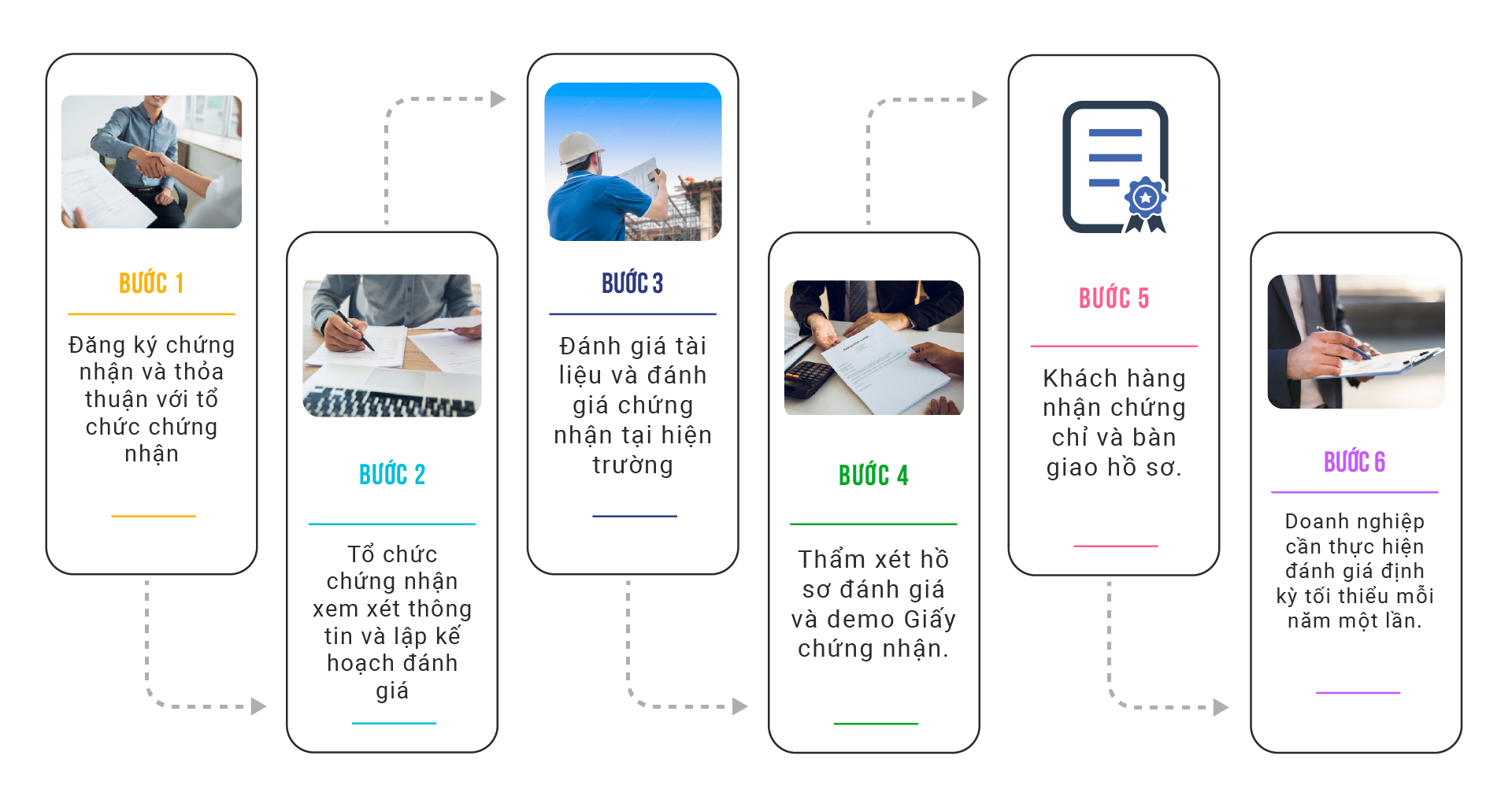
The certification process of GOODVN is carried out through the following steps. These steps ensure the certification is objective and in accordance with the requirements of the standard.
Step 1: Register for certification and agree with the certification body GOOD Vietnam.
Step 2: The certification body GOOD Vietnam reviews information and establishes an assessment plan.
Step 3: Document review and on-site certification assessment.
Step 4: Review of assessment records and demo of the Certificate.
Step 5: Issue GMP certificate and hand over records.
Step 6: Periodic surveillance, maintaining the GMP Certificate which will be valid for 3 years. The enterprise will conduct periodic assessments at least once a year.
Good Vietnam’s certification is recognized nationwide
Branch system across all 3 regions of the country ensures to meet enterprise requirements anytime, anywhere
Good Vietnam ensures the assessment and certification time is quick on the basis of fully meeting ISO/IEC standards;
Good Vietnam’s customers always receive the most competitive Cost
Team of highly qualified experts with over 10 years of experience, providing dedicated and professional customer consultation support
How much does GMP certification cost?
The cost to obtain a Good Manufacturing Practice certificate is determined by the size of a business. The cost of a good manufacturing practice certificate varies depending on the size of your business and other details.
There are several costs associated with obtaining a GMP certificate, we can sum them up. We may also have other options if we feel we cannot afford these fees.
First, we need to know what costs are involved in GMP certification. There are two major, fixed fees to obtain a GMP certificate, which are:
Certification registration fee
Annual certification fee (Paid to the certification body)
The registration fee and annual fee are fixed costs and are non-negotiable. In addition, we have fees for the assessment process. The assessment process will have to be conducted by a third party and we will have to pay these units directly for the services used by the company.
Validity of the GMP certificate?
The GMP certificate is valid for 3 years from the date of the most recent inspection; however, the validity period may be shortened if circumstances permit. The good manufacturing practice certificate refers to a specific inspection and cannot be renewed until a new inspection is conducted.